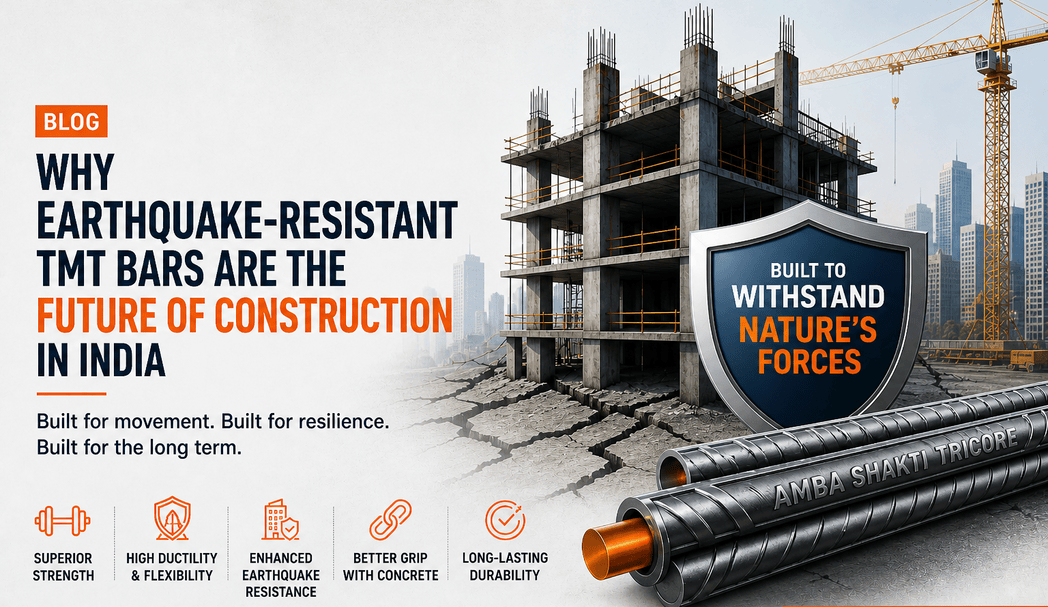
Why Earthquake-Resistant TMT Bars Are the Future of Construction in India

Why Earthquake-Resistant TMT Bars Are the Future of Construction in India
For a long time, construction in India has been judged by one thing – strength. The stronger the structure, the safer it was considered. Today, that understanding is evolving.
With rising skylines, denser urban spaces, and greater seismic awareness, strength works alongside movement. Buildings today are expected to respond to dynamic forces with balance and resilience. That’s why earthquake-resistant TMT bars are shaping the future of construction in India.

The Real Challenge Is Movement

In everyday conditions, a building stands composed. It carries load, distributes weight, and maintains stability.During seismic activity, the ground shifts and the structure moves. Forces travel in multiple directions, creating dynamic stress across the framework. In these moments, performance depends on how materials respond under stress.

Steel that allows controlled flexibility supports the structure through this movement. It absorbs energy, adjusts, and maintains cohesion.This is where Amba Shakti Tricore stands out. Its advanced core design creates a balance of strength and flexibility, allowing the bar to respond smoothly to seismic forces while maintaining structural integrity.

What Makes a TMT Bar “Earthquake-Resistant”?

It’s a combination of properties working together:
  • Ductility: Allows the steel to stretch and adapt
  • Elongation: Helps absorb sudden shocks
  • Flexibility: Enables movement along with the structure
  • Grip with concrete: Keeps the entire system unified during vibrations

The most effective TMT bars in India, for earthquake zones, work in harmony with these forces, adjusting and stabilising the structure. With Amba Shakti, this performance is built into the material. The Tricore technology creates a refined balance between a strong outer layer and a resilient inner core, enabling the steel to absorb and distribute seismic energy efficiently.

Why This Matters More Now

India’s construction landscape has transformed:
  • Taller buildings
  • Faster construction cycles
  • More complex infrastructure

At the same time, many regions fall within seismic zones, making resilience an essential part of design thinking.

The focus today has shifted toward a deeper question:

“How well does the structure perform under dynamic conditions?”Materials like Amba Shakti Tricore play a key role here. Its ability to handle cyclic loading and continuous stress makes it highly effective during seismic activity, where forces move in waves and phases.

It Starts with How Steel is Made
The performance of a TMT bar begins inside the plant.Consistency, purity, and structural precision shape how steel behaves in real-world conditions.

Processes such as:

  • Thermex quenching (for outer strength and inner resilience)
  • Ladle Refining Furnace (LRF) (for cleaner, more refined steel)
  • Precision rolling (for enhanced bonding with concrete)

These directly influence performance during seismic activity, where reliability is essential at every stage.  In Amba Shakti Tricore, these processes come together to create a microstructure that enhances fatigue resistance, allowing the steel to perform consistently through repeated seismic movements. The Direction We’re Heading: Construction in India is evolving with intent.
Built for movement.Built for resilience.Engineered for the long term.

Earthquake-resistant TMT bars have become a foundational choice in modern construction.Because true strength reveals itself when structures adapt, respond, and continue to stand steady through changing conditions.And in those moments, solutions like Amba Shakti Tricore quietly reinforce that confidence.

FAQs

  1. What are earthquake-resistant TMT bars?

    Earthquake-resistant TMT bars are high-strength steel bars designed with superior ductility and flexibility. They can absorb and dissipate seismic energy, reducing the risk of structural damage during earthquakes and improving overall building safety.

  2. Why are earthquake-resistant TMT bars important for construction in India?

    Earthquake-resistant TMT bars are essential for construction in India because many regions fall under seismic zones. These bars enhance structural stability, prevent sudden collapse, and ensure safer buildings, making them crucial for modern infrastructure development.

  3. Why are earthquake-resistant TMT bars important for construction in India?

    The best TMT bars for earthquake zones in India are those with high ductility, such as Fe 500D and Fe 550D grades. These high-strength TMT bars offer excellent flexibility, strength, and resistance to seismic forces, making them ideal for safe construction.

  4. Why choose Amba Shakti Steels for earthquake-resistant TMT bars?

    Amba Shakti Steels manufactures high-strength TMT bars using advanced technology to ensure superior ductility and durability. Their bars are designed to meet modern safety standards, making them a reliable choice for earthquake-resistant construction in India.

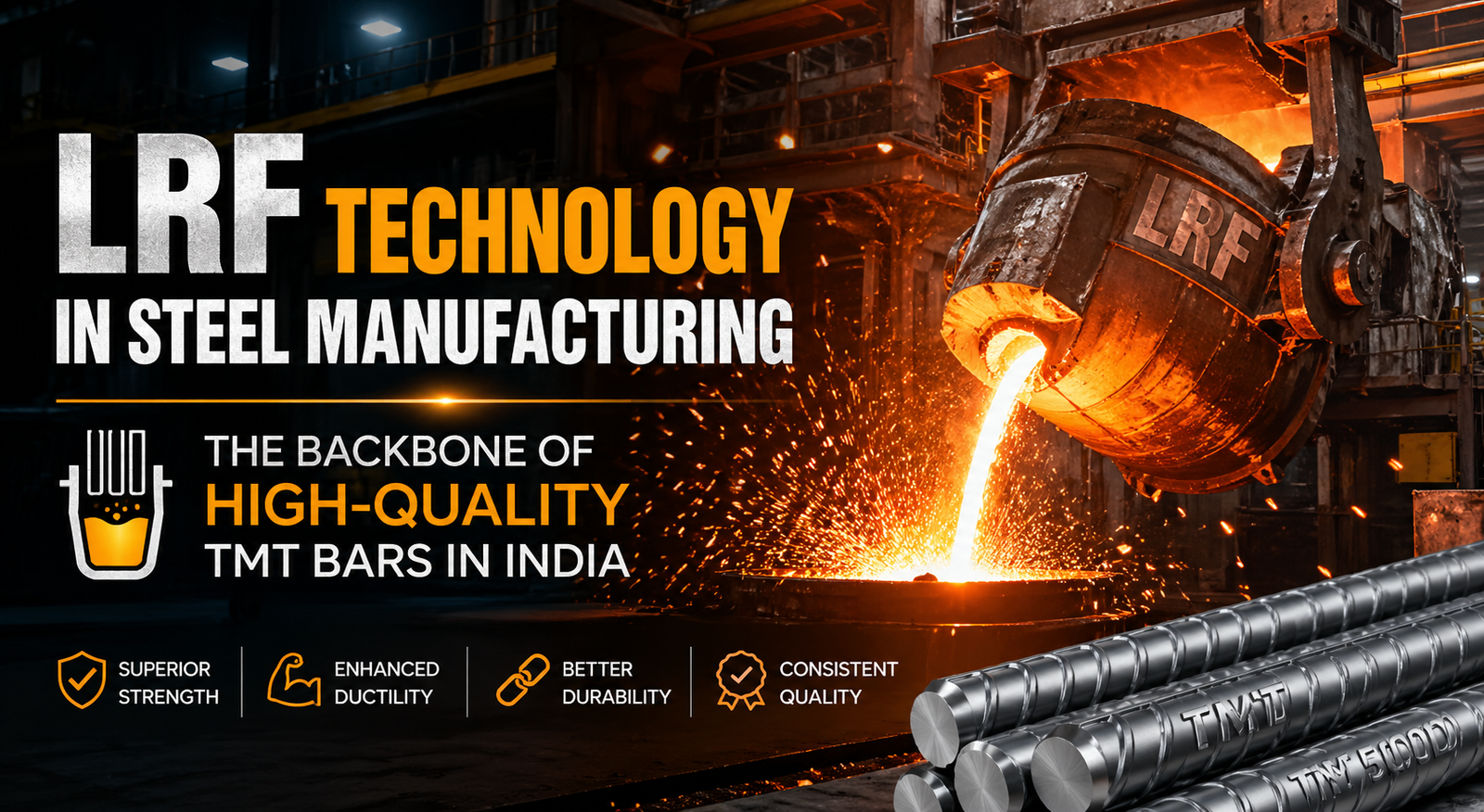
LRF Technology in Steel Manufacturing: The Backbone of High-Quality TMT Bars in India

LRF Technology in Steel Manufacturing: The Backbone of High-Quality TMT Bars in India

In modern metallurgy, the difference between average steel and high-performance steel lies in refining precision. As construction standards evolve, ensuring consistency, purity, and structural reliability has become critical.

At Amba Shakti, this precision is strengthened through the adoption of Ladle Refining Furnace (LRF) technology, enabling enhanced product quality through advanced refining. As one of the early adopters of LRF technology in North India, the focus has been on improving steel at its core.

LRF technology plays a defining role by enhancing the internal quality of steel before it is cast into billets, resulting in improved strength, corrosion resistance, and overall performance – key factors that directly impact TMT bar quality in India

What is LRF Technology?

A Ladle Refining Furnace (LRF) is a secondary refining unit used after the primary steel-melting process. Once molten steel is produced in the induction furnaces, it is transferred into a ladle where further refinement takes place using graphite electrodes that enable precise alloy alterations to make the best quality steel.

The purpose of LRF is not to melt steel, but to refine its chemical composition and purity under controlled conditions.

This process involves:

  • Precise adjustment of alloy composition
  • Removal of impurities such as sulphur and phosphorus
  • Temperature control for uniformity
  • Homogenization of molten steel


Why LRF Matters in Steel Manufacturing in India

With infrastructure projects becoming more demanding, expectations from reinforcement steel have increased. Steel manufacturing in India today, is no longer just about producing large quantities, but about delivering consistent and reliable performance.

LRF technology supports this by ensuring:

  • Cleaner steel with fewer inclusions
  • Controlled chemical composition
  • Improved structural integrity


How LRF Technology Improves TMT Bar Quality

Enhanced Chemical Purity

LRF reduces impurities like sulphur and phosphorus, resulting in cleaner and tougher steel.

Better Strength and Ductility Balance

Precise composition control ensures an optimal balance between strength and flexibility, essential for handling both static and dynamic forces.

Improved Corrosion Resistance

Cleaner steel is less reactive to environmental conditions, making it suitable for coastal regions, humid environments, and long-life infrastructure.

Consistent Mechanical Properties

Uniform refining ensures reliable performance across batches, especially important for large-scale projects.

Better Weldability and Workability

LRF-treated TMT bars offer improved weldability and bendability, making them easier to use on-site without compromising integrity.

LRF Technology and Sustainable Steel Manufacturing

As the industry moves toward more responsible practices, the focus is not only on strength but also on how steel is produced.

Amba Shakti Tricore TMT bars combine advanced LRF refining with a zero fossil fuel manufacturing approach, where electricity is sourced from captive solar and wind power plants. This significantly reduces dependence on coal-based energy and lowers the overall carbon footprint.

Importantly, this sustainability does not compromise performance. These TMT bars maintain the same strength, durability, and reliability while supporting environmentally conscious construction.

Conclusion

LRF technology has become a critical component in producing high-quality reinforcement steel. By improving chemical purity and ensuring consistency, it enhances the performance and reliability of TMT bars in India.

When combined with responsible manufacturing practices, as seen in Amba Shakti Tricore TMT bars, it also supports a more sustainable approach to construction.

In today’s evolving construction landscape, the real value lies in precision, consistency, and responsibility in how steel is made.

FAQs

  1. What is LRF Technology in Steel Manufacturing?

    LRF (Ladle Refining Furnace) technology in steel manufacturing is an advanced secondary refining process used to improve the purity and composition of molten steel. It helps remove impurities like sulfur and phosphorus, ensuring better control over chemical properties, which ultimately enhances TMT bar quality in India.
  2. How does LRF Technology improve TMT bar quality in India?

    LRF technology improves TMT bar quality in India by ensuring uniform chemical composition, higher strength, and better ductility. It refines molten steel to produce high-quality TMT bars that offer improved durability, corrosion resistance, and performance in construction projects.

  3. What are the benefits of LRF TMT bars for construction?

    The key benefits of LRF TMT bars include superior strength, consistent quality, enhanced weldability, and better resistance to corrosion. These properties make them ideal for modern construction, especially in infrastructure and high-rise buildings where safety and durability are critical.

  4. Why choose Amba Shakti Steels for LRF technology TMT bars?

    Amba Shakti Steels uses advanced LRF technology in steel manufacturing to produce high-quality TMT bars with superior strength and consistency. Their focus on modern technology and strict quality control makes them a reliable choice for builders looking for durable and high-performance steel in India.

Top 10 TMT Bar Brands in India for 2026: Quality, Strength & Price Comparison

Top 10 TMT Bar Brands in India for 2026: Quality, Strength & Price Comparison

The Indian construction sector is evolving rapidly, and so is the demand for high-performance reinforcement steel. With multiple options available in the market, choosing from the Top 10 TMT Bar Brands in India can be challenging for builders, contractors, and homeowners.Each brand offers a different combination of strength, ductility, manufacturing technology, and pricing, making it important to evaluate them based on performance and not just popularity. This guide provides a clear overview of the best TMT bars in India, helping you make an informed decision.

What Defines the Best TMT Bars?

Before exploring the TMT bar brands list in India, it’s important to understand what separates high-quality TMT bars from average ones.Key parameters include:
  • Yield Strength (Fe500, Fe550, etc.)
  • Ductility & elongation properties
  • Corrosion resistance
  • Rib design for bonding strength
  • Manufacturing process & quality control
The top TMT bar brands in India consistently deliver across all these parameters.

Top 10 TMT Bar Brands in India (2026)

Here’s a curated list based on market presence, manufacturing quality, and performance reliability:
  1. Tata Tiscon

    One of the most recognised names in India, known for consistent quality and strong brand trust. Widely used in residential and infrastructure projects.

  2. JSW Neosteel

    Backed by JSW Steel, this brand is known for advanced manufacturing and high ductility, making it suitable for seismic zones.

  3. SAIL TMT Bars

    Produced by Steel Authority of India, these bars are preferred for government and large-scale infrastructure projects due to reliability and compliance.

  4. Jindal Panther

    A popular choice for both residential and commercial construction, offering good strength and nationwide availability.

  5. AMBA Shakti Tricore TMT Bars

    AMBA Shakti stands out for combining Advanced high-quality steel manufacturing with sustainable manufacturing. Produced using electricity from captive solar and wind power plants, these TMT bars significantly reduce the carbon footprint of steel production, while maintaining the highest standards of Strength, durability, ductility, corrosion resistance, seismic resistance and weldability.

  6. SRMB TMT Bars

    Known for earthquake-resistant properties and a strong presence in eastern India.

  7. Kamdhenu TMT Bars

    A widely distributed brand offering consistent quality and accessibility, especially in retail markets.

  8. Shyam Steel

    Recognised for corrosion resistance and strength, commonly used in residential construction.

  9. Vizag Steel TMT Bars

    Manufactured by Rashtriya Ispat Nigam Limited, these bars are known for high quality and performance consistency.

  10. Captain TMT Bars

    A growing brand offering competitive pricing and reliable quality, especially in regional markets.

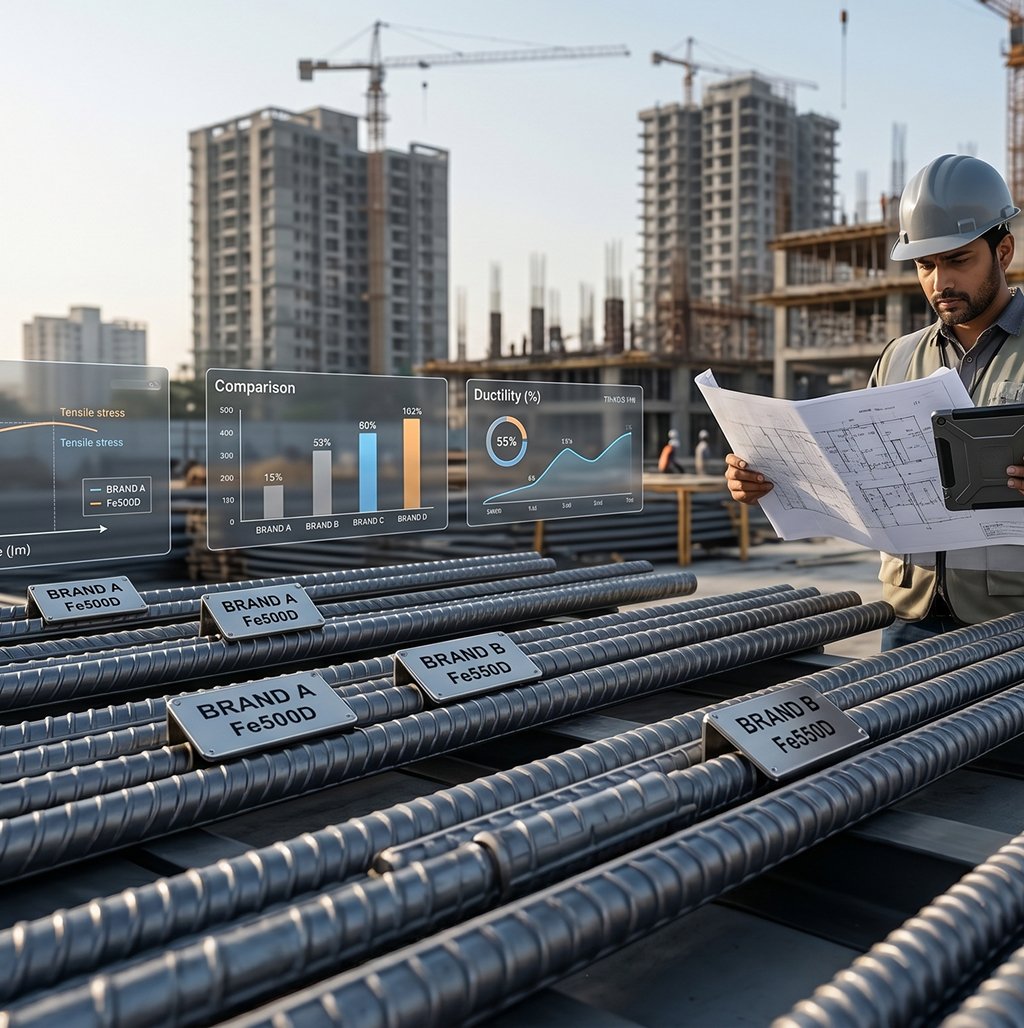
Strength Comparison Across Brands

Most brands today offer standard grades like Fe500 and Fe550, which are suitable for:

  • Residential construction
  • Commercial buildings
  • Infrastructure projects
While the grade may be similar, the difference lies in manufacturing precision, chemical purity, and process control, which directly affect real-world performance.

Price Comparison: What to Expect in 2026

The TMT steel bar price per kg varies depending on:
  • Brand reputation
  • Manufacturing technology
  • Raw material sourcing
  • Order quantity (retail vs bulk)
Premium brands may have slightly higher pricing, but they often provide:
  • Better consistency
  • Higher durability
  • Lower long-term maintenance risks
For large projects, the bulk TMT bar price in India is usually more competitive due to volume-based pricing.

Technology as a Differentiator

Leading top TMT bar brands in India invest in advanced production technologies such as:
  • High-speed Horizontal-Vertical Rolling Mills for uniform dimensions
  • German Thermex quenching technology for strength and ductility
  • Ladle Refining Furnace (LRF) for improved chemical purity
  • CNC-machined mill rolls for sharper rib patterns
These technologies ensure that TMT bars perform reliably under structural stress and over long service life cycles.

Sustainability: The Emerging Factor

In 2026, sustainability is becoming an important consideration in construction material selection. Steel manufacturing consumes large amounts of electricity, and the source of this energy significantly impacts the environmental footprint.AMBA Shakti Tricore TMT bars address this by using renewable energy from captive solar and wind power plants, reducing dependence on coal-based power. This approach lowers emissions while delivering the same structural performance, aligning with responsible and environmentally friendly construction practices.

Conclusion

Choosing from the Top 10 TMT Bar Brands in India requires balancing strength, quality, consistency, and price. While many brands offer similar grades, the real difference lies in manufacturing technology, process control, and reliability.The best TMT bars in India are those that not only meet structural requirements but also ensure long-term durability. As the industry evolves, factors like sustainability are also gaining importance.Brands like AMBA Shakti Steels demonstrate that it is possible to combine high-quality steel production with renewable energy, supporting both structural performance and a more sustainable future for construction in India.